

The Vantrue Sonnet S1 Pro Max aims to stand out in a crowded dashcam market with dual 4K recording, STARVIS 2 sensors, and a long list of advanced features. I’ve been using it for a while and wanted to see how well it performs in everyday driving conditions—particularly at night. So how does it stack up?
Vantrue Sonnet 1 Pro Max Features at a glance:
- Dual 4K HDR Recording at 30 fps
- Dual SONY STARVIS 2 IMX678 Sensors
- Vantrue Intelligence for Smarter Driving
- Exclusive PlatePix™ Technology
- LTE Module Compatible
- 15 second Pre-Recording Buffered Motion Detection
- 5GHz High-Speed WiFi & Free App
- Smart Voice Control
- 24/7 Parking Mode
- Built-in Dual-Sys. GPS Logger
- Supports up to 1TB microSD Card
When it comes to choosing a dashcam, one of the most important things to consider is the image sensor. The Sony STARVIS 2 is widely regarded as the gold standard thanks to its excellent HDR capabilities and superior low-light performance. In real-world terms, that means you can theoretically capture crucial details (like license plates) whether you’re driving on a sunny afternoon or down a dark backroad at night. Honestly, any dashcam without a STARVIS 2 sensor is hardly worth your time.
So what’s better than a dashcam with a STARVIS 2 sensor? Why, a dashcam with two of them, of course! Enter the Vantrue Sonnet S1 Pro Max.

The Sonnet S1 Pro Max (not to be confused with the older S1 Pro) features a dual-camera setup, recording both the front and rear of your vehicle. While plenty of dashcams now use STARVIS 2 in the front, very few offer it in both cameras. Most brands skimp with a lower-quality, non-4K sensor in the rear, resulting in subpar detail. This is where the Sonnet S1 Pro Max stands apart from the competition, making it one of the first dashcams on the market to deliver the best image quality from both cameras.
I considered installing the dashcam myself after watching a YouTube tutorial, but the process involved removing or loosening panels near the airbags, which I wasn’t comfortable doing. I also wasn’t entirely confident in my ability to route the wiring cleanly to the rear hatch or properly hardwire the system. In the end, I decided to have it professionally installed at my local Best Buy for $99. The installation took about 45 minutes, and the cables were hidden exceptionally well. Overall, I think it was a worthwhile investment for the peace of mind and clean results.
As part of the installation, the Best Buy technician set the time and date, attached the circular polarizing filter (CPL), and formatted the microSD card. Out of the box, the Sonnet S1 Pro Max comes with “Vantrue AI” enabled by default. This feature allows the dashcam to detect pedestrians, issue warnings for potential forward and rear collisions, and alert you to lane departures. The Vantrue AI alerts are spoken by a recorded female voice, but the audio can be hard to understand at times due to the accent and the way some words are pronounced.
I wasn’t aware this system was active, so on my drive home, I was surprised to hear a woman’s voice repeatedly warning me every time I changed lanes or followed a vehicle “too closely” (at least according to the dashcam). My car already has a forward collision alert system that I trust far more than whatever Vantrue is using, and I certainly wasn’t tailgating. The lane departure alerts were equally annoying, making the entire experience feel like I was driving with an overly anxious backseat driver. I immediately disabled Vantrue AI as soon as I got home.
Daytime performance of the Sonnet S1 Pro Max is generally solid—I was able to capture license plates and details with ease, as long as vehicles were fairly close. While I could read distant plates with my own eyes, the recorded footage made it clear (or, rather, not clear) the S1 Pro Max couldn’t capture them with the same clarity.

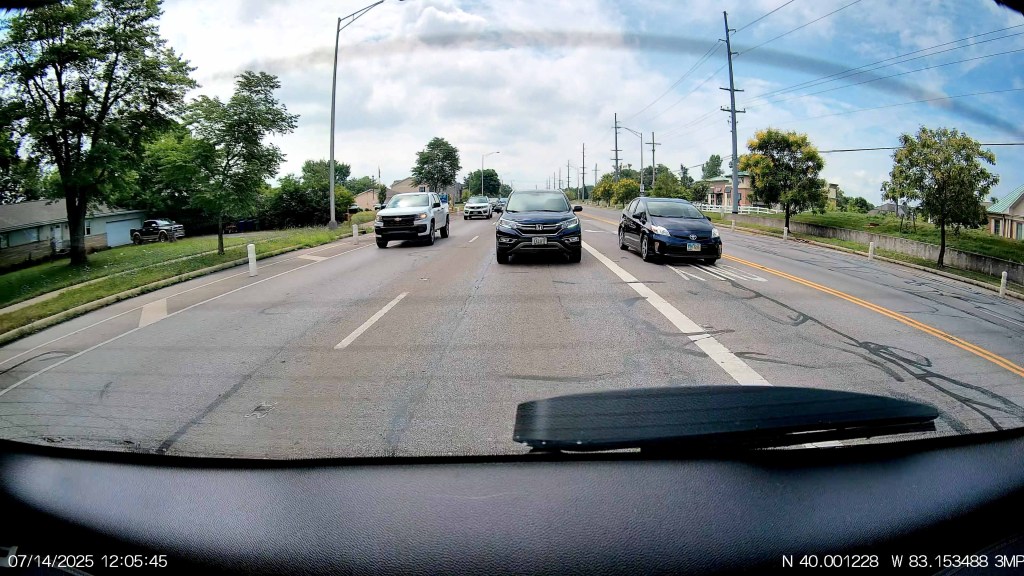


Nighttime performance is more of a mixed bag. The S1 Pro Max features Vantrue’s PlatePix technology:
PlatePix™ Technology is an advanced image processing system specifically designed to enhance the clarity and accuracy of license plate recognition in dash cams. Utilizing state-of-the-art algorithms and high-resolution imaging, PlatePix™ excels in capturing license plates under various challenging conditions—be it high-speed scenarios, low-light environments, or adverse weather conditions. This technology ensures that every frame of your footage is optimized to provide the sharpest and most reliable details, making it an indispensable tool for any driver.

With HDR enabled and the CPL attached, PlatePix didn’t seem to do much other than make the video significantly darker. Despite Vantrue’s marketing claims, I actually had better luck capturing plate details at night with PlatePix turned off. Even then, performance was hit or miss. Plates that were clearly visible to the naked eye often appeared washed out or blurry in the footage, especially while moving. I expected better low-light performance. If PlatePix improves with a future firmware update, I’ll consider giving it another try. For now, though, it’s staying off.
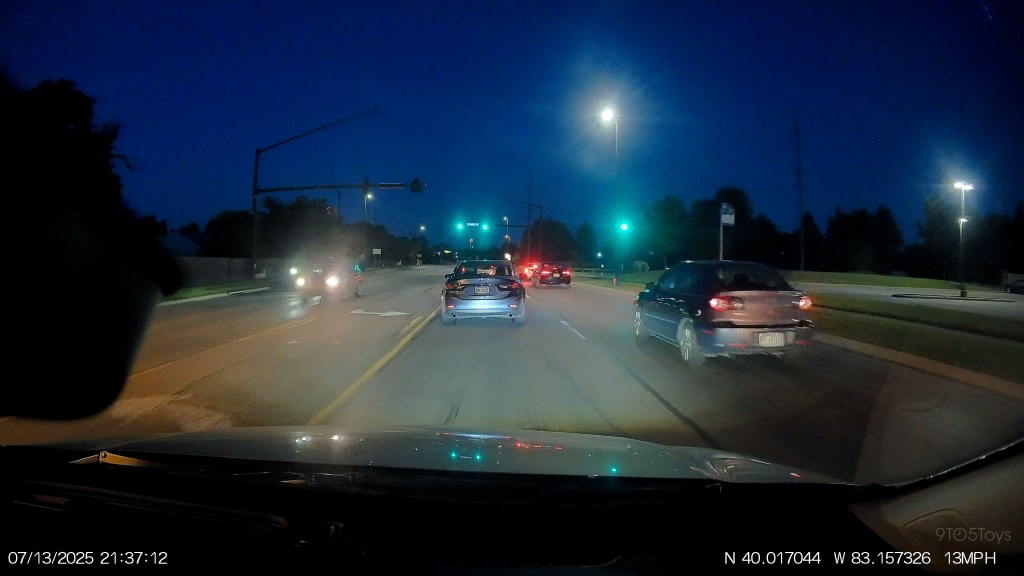

The quickest way to access your recorded footage is simply to pop out the microSD card and copy the files directly. Alternatively, you can transfer videos using the Vantrue app for iOS and Android, which connects to the S1 Pro Max over a 2.4GHz or 5GHz ad-hoc Wi-Fi network. It’s not the fastest method, but it’s nice that Vantrue offers the option. One thing to keep in mind: if your vehicle has wireless CarPlay, you’ll need to disable it temporarily to connect to the dashcam.
Video Footage
Here are a few video clips from the Sonnet S1 Pro Max:
Final Thoughts
Even if it struggles with perfect plate capture, the S1 Pro Max’s STARVIS 2 sensors still deliver enough detail to identify the make, model, and often the color of most vehicles, which is better than nothing. In the event of an accident or road rage incident, you’ll at least have reasonably clear footage, though don’t expect the sharpness or detail you’d get from an iPhone. At the end of the day, any dashcam footage is better than none in a “your word against theirs” situation and the Vantrue Sonnet S1 Pro Max delivers adequate, if not exceptional, performance.


FTC: We use income earning auto affiliate links. More.



Comments