
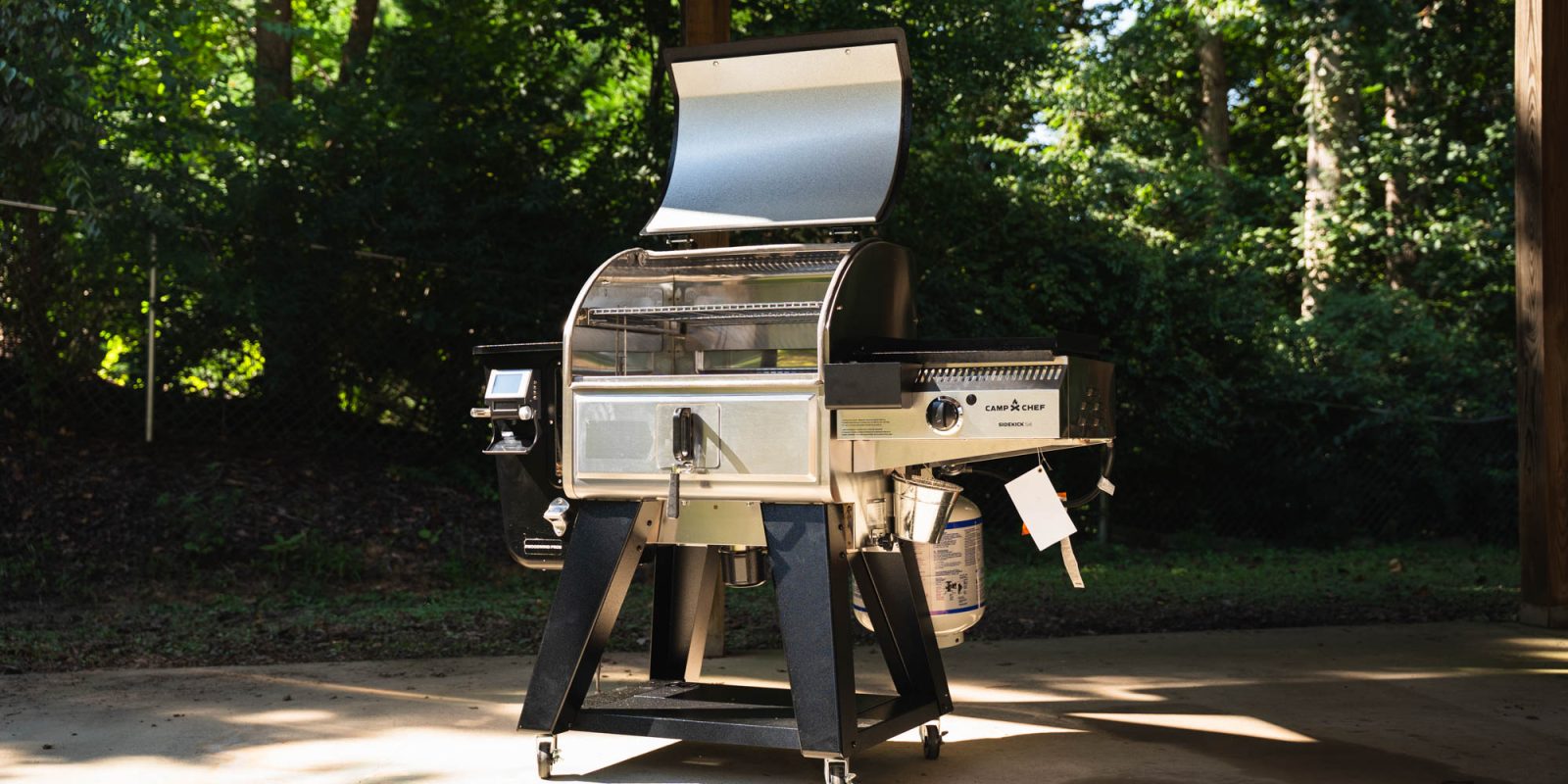
Pellet smokers, in general, are divisive. Many cooks and enthusiasts favor the convenience of pellets, while purists and even those grounded by taste suggest offsets and traditional smokers are the more favorable option. The Woodwind Pro from Camp Chef is ready to dispel those notions by bringing real wood flavor to an otherwise simple, but excellent, experience.
I’ve been smoking food for a little while. Not long enough to watch Barbecue Showdown on Netflix and have the gall to assume I could keep up with whatever unreal dish is being smoked and prepped, but enough to know why I prefer certain cooking experiences over others.
Camp Chef has developed a reputation over the last few years, specifically for pellet grills. The company’s smokers have consistently good ratings and, like any grill or smoker manufacturer, a bit of a cult following.
Since Camp Chef’s pellet grills have gained popularity, competitors have worked just as hard to roll out new designs with tons of add-ons that make them better than the cooker next to it in the store.
Amongst all of those, the Woodwind Pro 24 and 36-inch models stand out as some of the best pellet grills on the market for a few reasons, and it’s hard to find much wrong. Still, I’m going to try.
The build
One of the best-looking pellet grills around
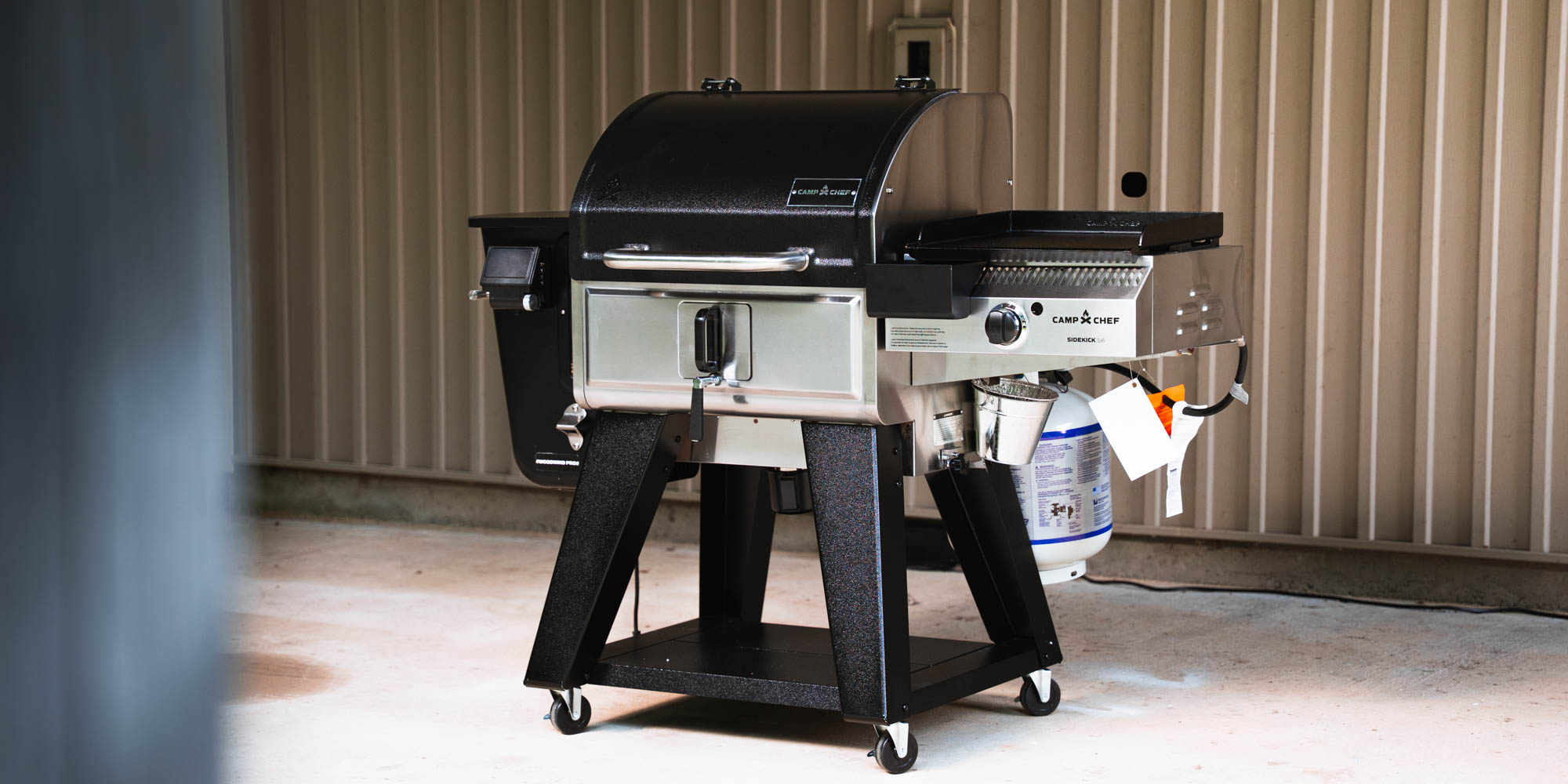
Contrary to most smokers or pellet grills Camp Chef has released in the past, the Woodwind Pro brings the best overall construction. The thing is built like a tank, offering a well-made barrel positioned on a set of thick legs with a lower storage rack. It just looks so good, which might not be a selling point for most, but appearance usually tells you a lot about how effort the company puts into the grill. Not always, but quality materials very much matter.
The Woodwind Pro series has four casters rather than two wheels positioned at one side. These aren’t my favorite wheels, but they do the job fine. In a perfect world, I’d love to see a set of polyurethane casters. That would likely give the smoker a smoother roll, similar to what the company has done in the past with two fixed wheels on one end.
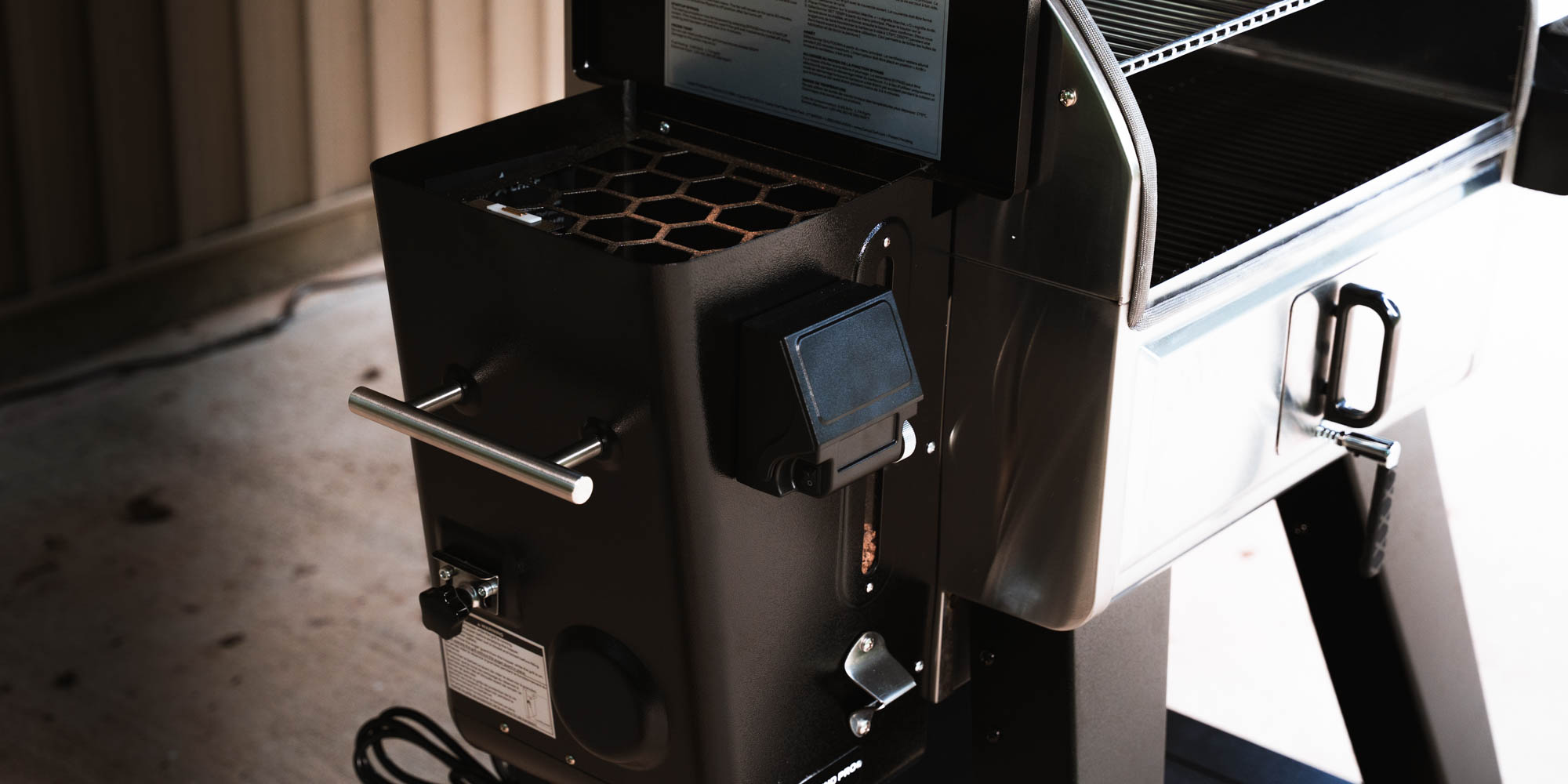
To the left of the main compartment is the auger and motor assembly, terminating in a top shelf for odds and ends as the cook goes on. The pellet hopper is equipped with a guard at the top to prevent large debris from falling in, and the chamber itself holds quite a bit.
Over my testing period, I’ve gained confidence in its pellet capacity. I wasn’t able to run a heavily extensive smoke, like a brisket or pork butt, but if I did, I’m sure it would need to be topped off towards the 10 to 12-hour mark. That also depends on your temperatures and smoke levels, but it’s a solid chamber size for the 24 model I used.
On the front of the hopper sits the Woodwind Pro’s crown jewel — Camp Chef’s 2nd-gen PID Wi-Fi controller. The display is full-color, and while that really doesn’t matter too much for cook quality, it’s really nice to see in a smoker above $1,000.

On the side of the controller display is a rotating know that sides perpendicular to the grill. As far as controls go, this is one of the best tactile features the company added to the smoker. Turning the knob highlights different selections, and a push selects that option. It’s incredibly quick in action, and it makes for a smooth interface experience.
Another small touch that elevates everything is the built-in display cover. The smoker itself can easily handle rain and other weather, but the option to cover the display is welcome, especially when you’re using Camp Chef’s app to control it more than the on-board controller. It’s also wonderful for those overnight cooks when you don’t want that incredibly bright display shining into your windows at night. Not more than a minor inconvienicne, but the option is there.
A smoking chamber that’s already one step ahead
There were a few things I thought about before I got the Woodwind Pro in for review. First, I knew I’d have to go through the process of lining the threshold with a new gasket to keep smoke from billowing out. Second, I was worried about top-rack space, because I’ve been burned before with a top-rack that has no business sticking around.
Both of those thoughts were quelled during the setup process.
Side note: setup took about an hour to complete, and being provided 3D CADs to follow during assembly was a massive help. It wasn’t hard, but it’s a process.
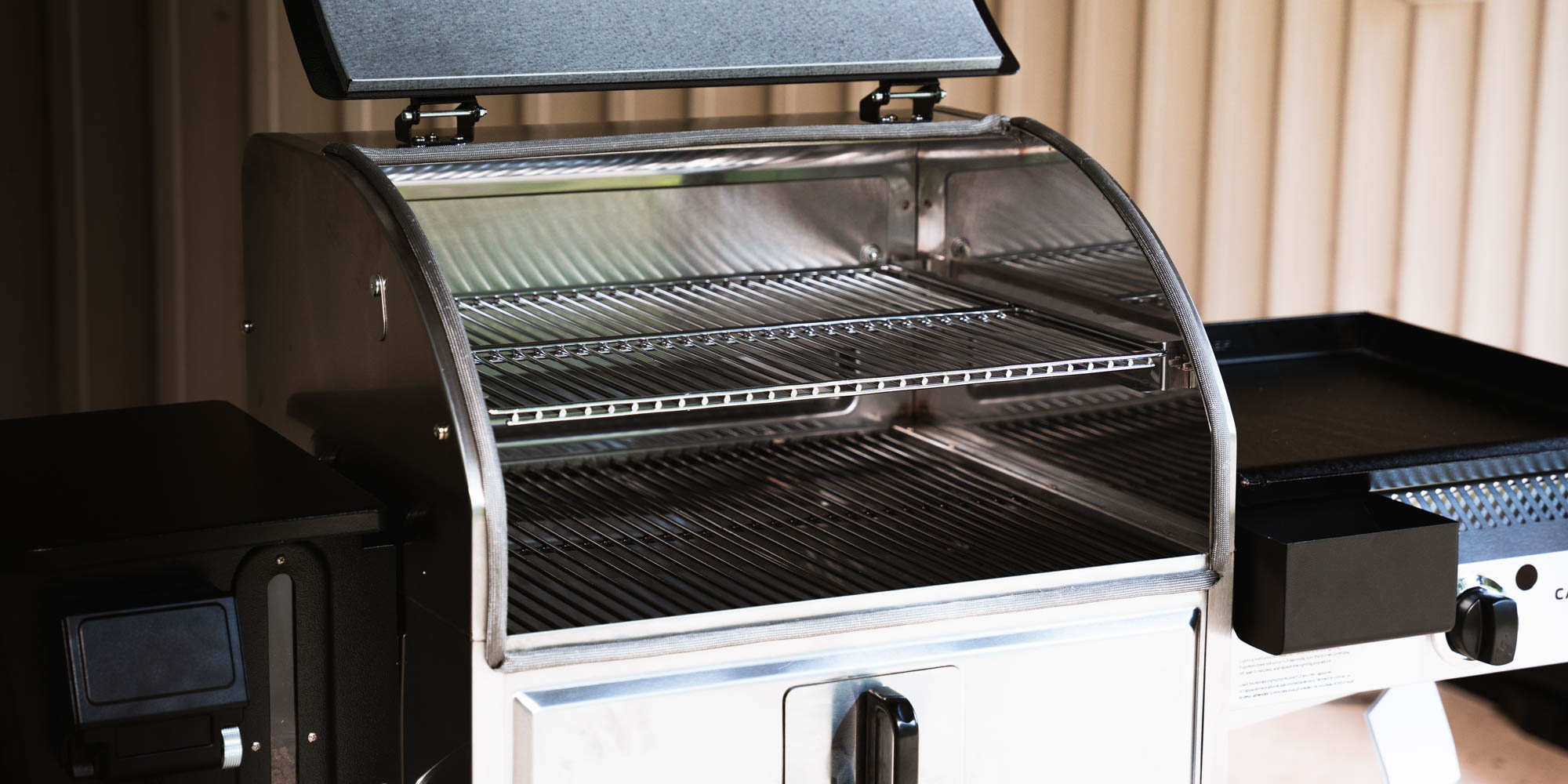
When I began that build, I immediately noticed that Camp Chef manufactures the Woodwind Pro with an installed gasket, meaning there would be no need to find one and adhere it myself. It’s a high-end gasket, too, with reinforced metal weave and a nice cushion. On the inside of the door, the Woodwind Pro also utilizes an insulated shielding. The idea is to keep the door from leaking heat constantly, and the gasket and insulation combo seems to be a good solution.
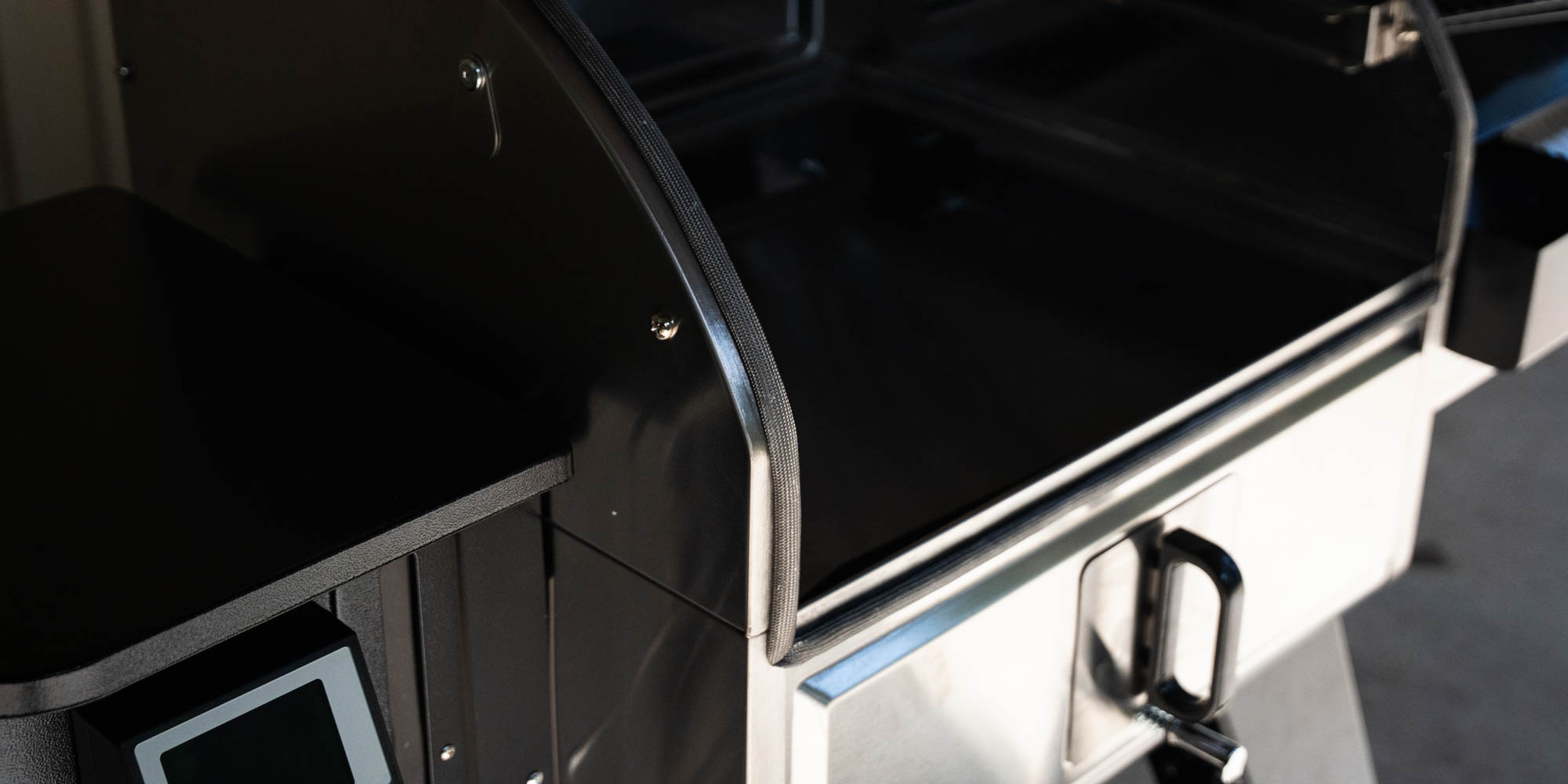
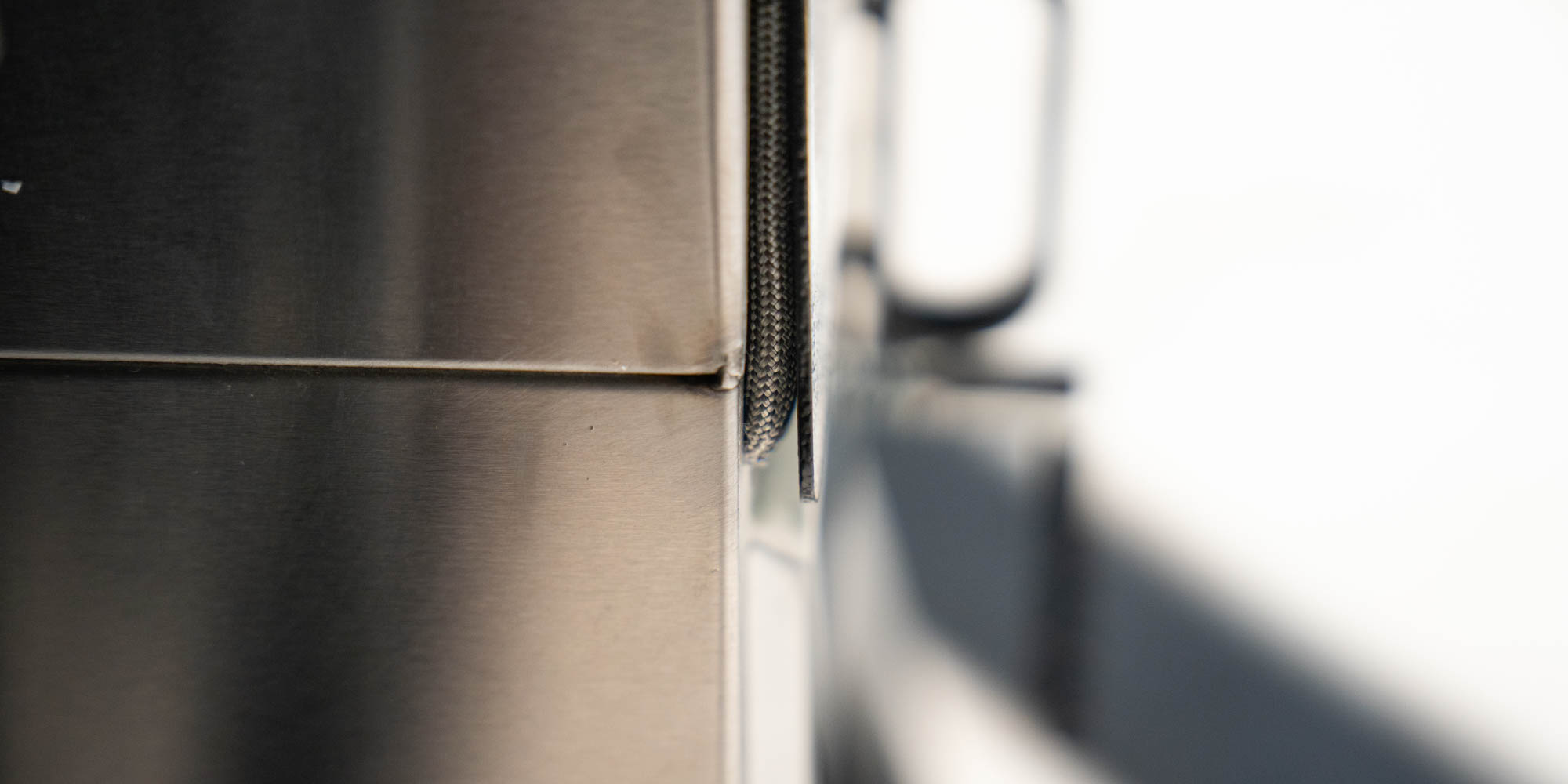
Keep in mind, thgouh, this all took place in the heat of summer, where insulation doesn’t play as big a part as in winter. Still, I have this sneaking feeling that the Woodwind Pro would perform jsut as well in cooler months.
The other surprise was the inclusion of a second top rack, essentially matching the depth of the bottom rack. Admittedly, I seemed to miss this popular design element of the Woodwind Pro prior to getting it in. In any case, it’s another welcome design element.
The second top-rack grate essentially means just as much volume can be cooked on the top as the bottom — well, kind of. The top grates still come close to the top of the chamber, so something tall like a ribeye roast or turkey would never fit. A brisket, on the other hand, would fit perfectly.

It suits itself to proteins that need a water tray underneath to keep the area humid during the cook. A brikset on top and a drip-tray underneath is more than possible, and probably something that would make the experience better than with other designs. That even goes for some of Camp Chef’s older models, which felt cramped and difficult to maneuver.
I will admit that the double top-rack can make cleaning and manipulating items on the main grates difficult. The space is plenty big enough for most meats, but it leaves little room to get your hands and arms in there. Remember that the top grate comes all the way out to the door, meaning you’ll be elbow deep in the smoking chamber before you reach the back.
Some cooks might go better without one of the top grates. That’s the other thing: Camp Chef designed the higher rack in two pieces, which adds some easy customization out of the box.
Everything about the main chamber is well-thought-out, even down to the diverter design. The older Camp Chef model I had utilized a grease diverter with slits cut into it. That was great for pass-through heat, but it was a nightmare to clean. The Woodwind Pro is much easier, and that diverter can be removed and wiped down pretty easily.
Alternatively, you can do what I do and line it with aluminum foil, with folded ridges on the side. That way, you never have to clean it, and grease can be physically pulled out without dripping into the gutter and bucket. It’s just a matter of preventative maintenance, but it takes a little more effort. That sort of counteracts the convenience of the pellet smoker, in some regards.

Camp Chef also decided to ditch the smoke stack and went with a different exhaust design. There is an internal chamber that catches smoke on its way back up from circling the food. On that rise, the smoke will funnel into a sleeve that ends in two exhaust ports, similar to the ones found on a Weber Kettle. Those can be opened and closed depending on outside temperature, and the system seems to work well, except for one interesting occurrence. More on that later.

The Woodwind Pro’s secret weapon
Incredibly, I haven’t mentioned the best part about this absolute unit.
The Camp Chef Woodwind Pro houses a small drawer that sits front-and-center, called the Smoke Box. The name’s confusing, becuase it would imply the pellet grill isn’t very good at producing smoke. It’s good, but this takes it to an entirely new plane.
The Smoke Box is a stainless stell drawer that opens to a compartment for wood chunks, chips, or charcoal. Once loaded up, the drawer slides in and a lever below can be opened to allow the burning pellets the ignite the wood.
It’s all in the way you utilize the lever, but if you do it properly, you have a smoker that produces smoke at levels exceedingly close to traditional offsets. The trick is to load the smoke box with fuel before you start. Once it’s up and running beyond the 6-minute start period, close the lever to almost 90%. From there, the wood will burn off and add more smoke to the cook than pellets could ever dream about.
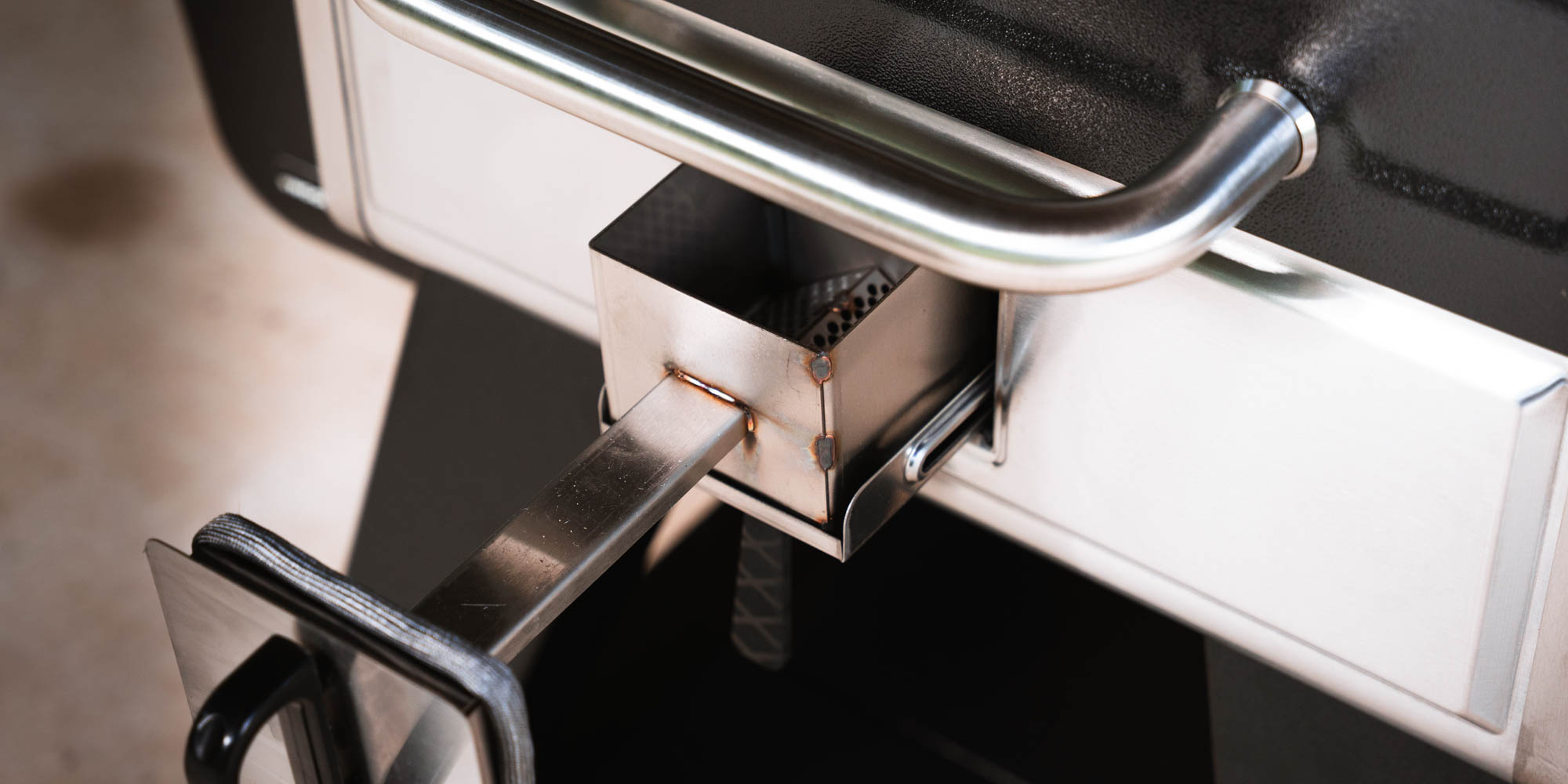

The downside to this is that is almost destroys the convienience of having a pellet grill. The wood chunks seems to alst around 45 minutes to an hour, and more will need to be added if you want more smoke. For something like a brikset or pork butt, that smoke box will need some rather close attention. For small items like wing, one fill is enough to make a big difference.
Overall, the Woodwind Pro’s construction is excellent. The wall thickness of the chamber isn’t exactly 1/8-inch steel, but it feels thicker than smoker models coming from other names at whatever hardware store is around you. On top of that, the pre-installed gasket and grate setup only makes the build better.

The cook
The smoke box bridges a massive gap
Over the course of testing, I’ve done a few cooks, including wings, beef cheek barbacoa, and lamb shoulder. With more time and a better entry-point to meat prices, I would’ve done more — I plan to.
Each of those cooks made use of the smoke box, and each required different cook times, obviously. For the beef cheeks, I threw them on for around 4 hours with hickory in the smoke box. The wings, on the other hand, required apple wood. To say the bark on the beef cheeks after just four or five hours was the same as if it were cooked with pellets alone would be a lie. I know what pellets do, and while they provide good smoke flavor with the sacrifice of ease, they can’t create bark like real wood chunks can.
The barbacoa I made, by popular opinion, was game-changing. That isn’t to toot my own horn, becuase the Woodwind Pro was genuinely the difference maker.
I’m not an offset type of guy. That requires skill on a different level than I can compete with. With that said, the smoke box gets me incredibly close without fire management. It’s just smoke management.
With the aid of the automatic PID controller and app or display, getting the Woodwind Pro up to temp and back is easy. I did notice that this model took its sweet time getting to certain points, but that isn’t a deal breaker; it’s just something to plan for.
The wings came out grea,t too. I was surprised by how much smoke they were able to take on in a matter of 30 minutes, which coincidentally, is how long it took my wood chunks to turn to ash. The latter part of the cook required a high 425-degree crisp-up, which only took about 20 minutes. It would have taken less time if the Woodwind Pro had been able to jump from 25 to 425 quickly. I’ll admit, that’s a big increase. Still, I’d like to see a more agile turnaround.
Another massive help is the Woodwind Pro’s probe capacity. Both models come with four color-coded probes. That, in itself, makes the process so much easier. I generally use Meater probes during my cooks, but having dedicated in-house options with easy identification is a massive deal.

To be fair, I’m sure you can buy color-coded wired probes, but not every model around has four connections.
Overall, the combination of smoke from the pellets and the wood box, just about every cook comes out with deeper smoke penetration. Like other Camp Chef smokers, pellet-produced smoke can be set to levels one through ten, though I default to 10 always unless I’m finishing up a cook on something wrapped. If the Woodwind Pro were to be used without wood in the smoke box, it would still give you a smoke flavor that would be received as “good” for most. That versatility is really what sets this model apart.
Tidbits
There were a few happenings during my review period that I wanted to note.
These were things that only occurred during the initial cook and setup. With Camp Chef’s customer support record, they’re likely not much to be concerned about.
During the first burn-off, I noticed the auger making a loud creaking noise. I researched it and couldn’t find anything quite close. It wasn’t from the fan or motor, but it sounded like the auger itself was rubbing the pellet chute. After the first cook, that noise seems to have dissipated.
The second interesting characeteristic of the Woodwind Pro is the unusual places smoke will pour out. The rear smoke exhaust works well, but it appears that the chamber is so well sealed that smoke builds more presssure in general. The exhaust system is sort of hidden, to keep air circulating. From what I can tell, that seems to push smok out of odd spots, like the ash pot.
I’ve never had a pellet grill push so much smoke out of the as pot on startup.The Woodwind Pro looks to reacha point quickly into the cook where smoke stops coming out, but there are a couple of reasons this could be happening.
It might be my fault. It that trapdoor isn’t seated properly, smoke from the burning pellets on top of it can fall and find its way through the ash cutout. Two, it could also be that Camp Chef’s clearances default to letting smoke out, with the expectation that thebuildup of carbon over a few cooks would close that small gap, efectively tightening tolerances.
In either case, it isn’t a dealbreaker; it’s just interesting.
Another important part of the Woodwind Pro’s ecosystem is the Sidekick. At its core, it’s a propane burner. Camp Chef makes several different attachments for the Sidekick that turn it into anything from a flat-top grill to a pizza oven.

The flat-top that I’ve been using has been beneficial for various reasons. I can take the griddle off and use the burner to boil or simmer sauces. I’ve even used it to season cast-iron skillets and carbon steel woks, since I don’t need to produce smoke in my house. Of course, the griddle is extremely useful for searing a steak or grilling smash burgers on the side, though the size of it won’t allow for more than maybe four burgers.
Though it has a small capacity, it adds some extra function that’s nice to keep on hand.

Final thoughts
The pellet smoker has been, and is, a fantastic option for most users. The flavor achievable makes the slight lack of smoke worth the ease of operation. That being said, I think the Woodwind Pro bridges that gap.
The ease is there, whether by app or PID. Just increase the temp, change the smoke, and you’re good to go. Where the difference narrows between smoker designs is in the smoke box. It completely changes how one is able to get a good bark on beef and higher smoke levels.
Granted, it’s more work, and I definitely see myself doing some cooking without it. But, for now, I’m loving the option for the sheer fact that it makes just about every item in the chamber come out better than with pellets alone.
The Camp Chef Woodwind Pro 24, which is what I used, technically comes in at $1,699, though it’s frequently reduced. It’s currently $1,199 in a lot of stores, like Amazon — yes, Amazon will send you a smoker — and Lowe’s. That’s pretty competitive, and it doesn’t come from a lack of quality. Still, Camp Chef makes up for the difference in build and substance, and I can’t fault it for that.
Buy the Camp Chef Woodwind Pro 24
Buy the Camp Chef Woodwind Pro 36


FTC: We use income earning auto affiliate links. More.


Comments