
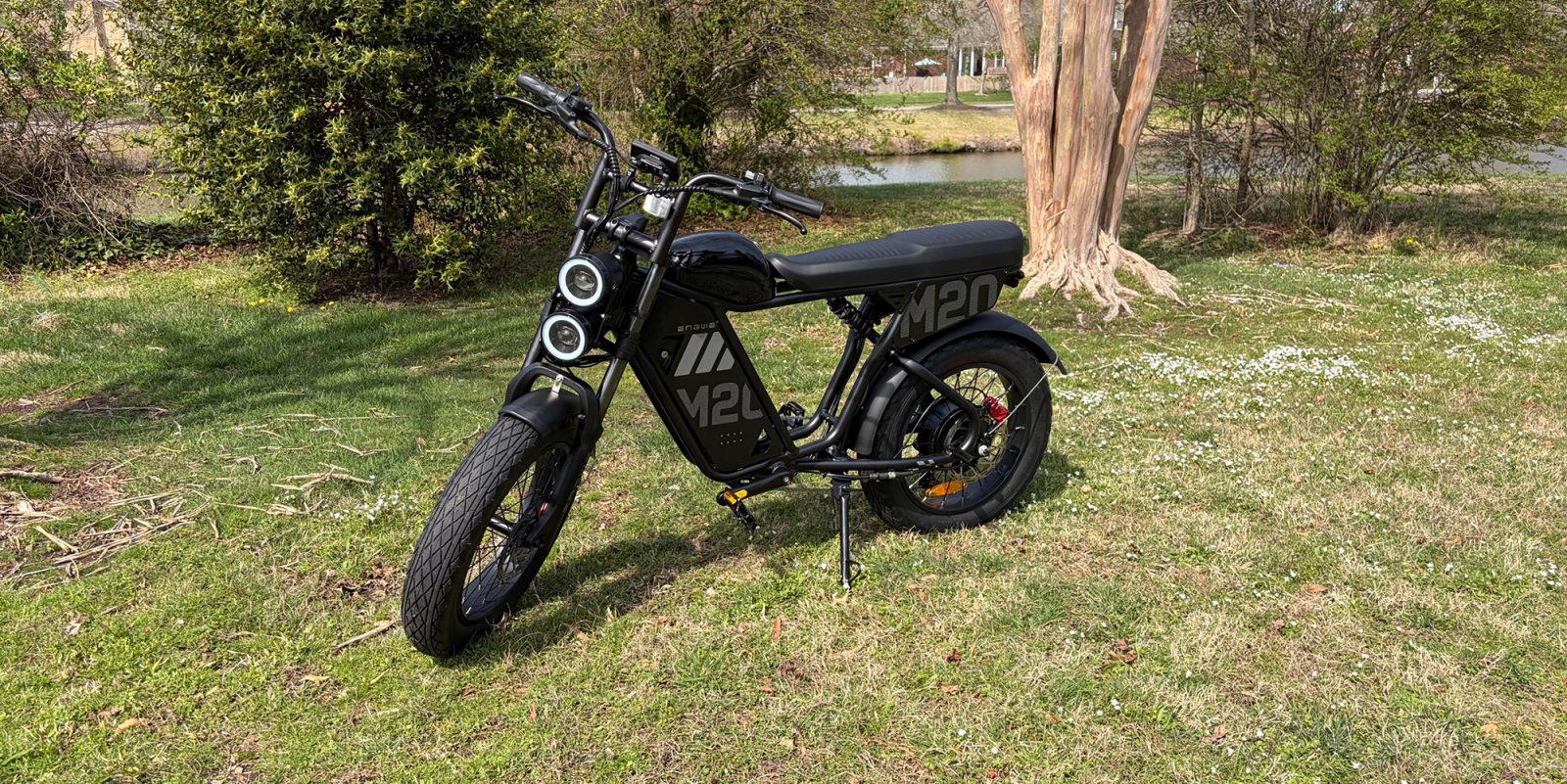
Every summer, I usually end up on a new e-bike and e-scooter combination for my commuting around both Brooklyn and the more suburban Virginia town where my family resides. This year, alongside my Navee UT5 Ultra X SuperScooter, I’ve been cruising around on Engwe’s new M20 3.0 Moped-Style e-bike, and boy, is it quite the surprise ride. Our readers may know that since last year, I’ve been loving my time on Lectric’s XP4 750 Folding Utility e-bike, and I still do, but ENGWE has put out quite the more budget-friendly option with this new ride, and both the single and dual-battery configurations bring along longer travelling distances and plenty of top-notch features, all packed inside a very stylish e-bike. Even my family has been enjoying it over their legacy Rad Power Bike models, and they’ve been quite impressed by its performance for the price. You can get my hands-on impressions from my time riding this new model down below.
Engwe’s M20 3.0 is more moped than e-bike
Anyone familiar with Engwe knows that the brand has been really playing around with the line between an e-bike and a moped on many of its designs, and while the M20 3.0’s descriptive part of its name suggests it is the former, just looking at its performance specs tells you that this is a moped disguised as an e-bike. I highly recommend not riding it without a helmet, and for all that is holy, don’t go giving this to a teenager without limiting the speeds; otherwise, you’ll most likely be hearing from your HOA and/or neighbors.
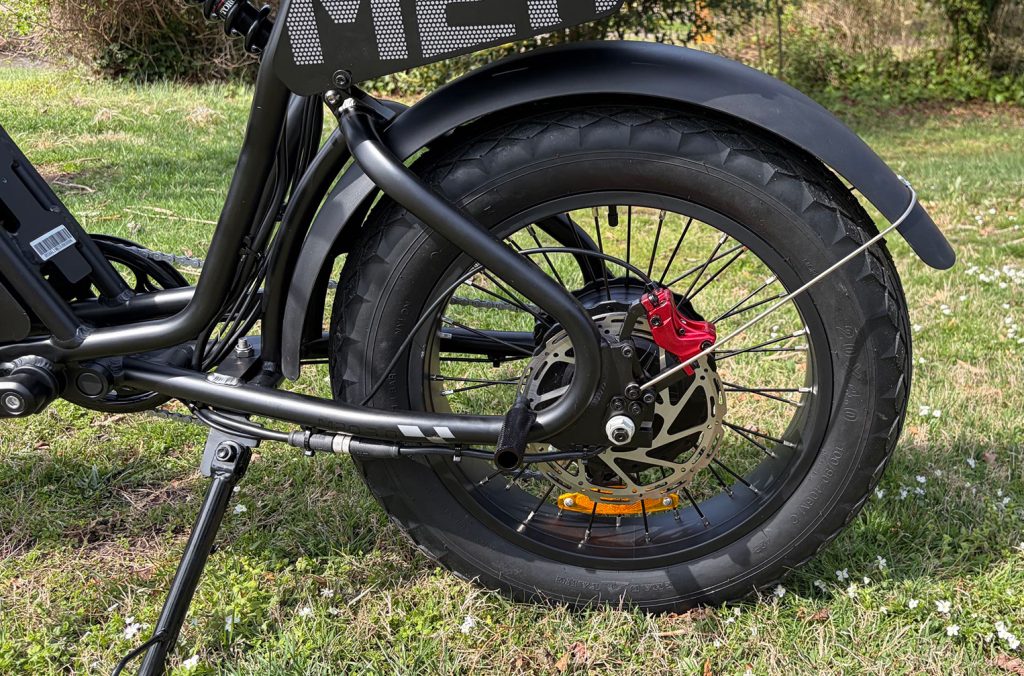
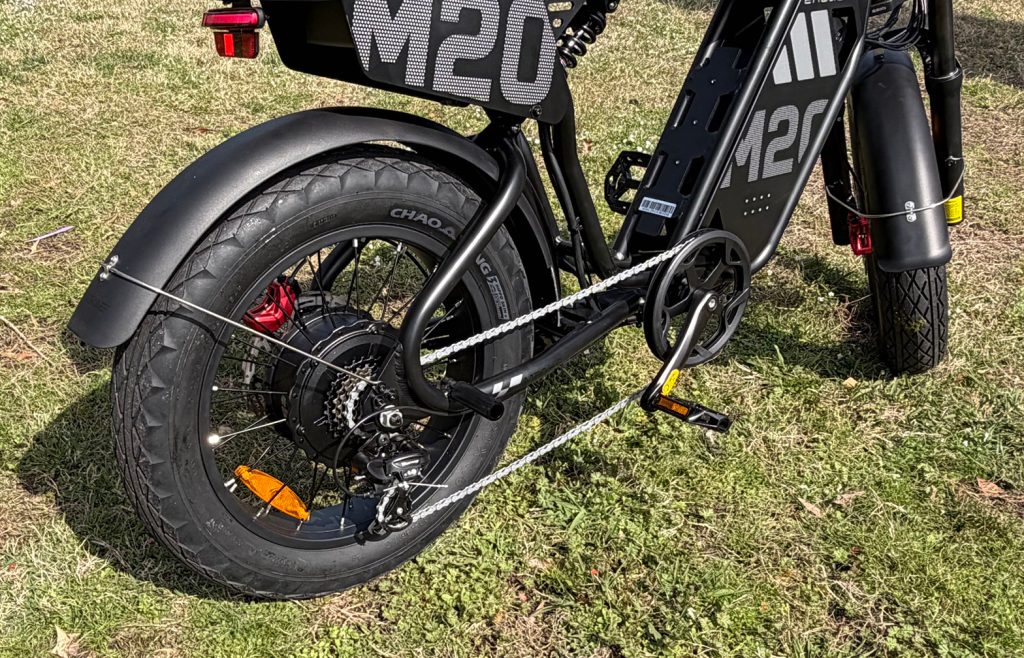
To start, the very obvious motorcycle-inspired frame houses a 1,000W rear hub motor that can peak at 3,300W and delivers 120Nm torque and can max out at 40 MPH speeds. The whole thing runs off a 60V 20Ah battery that you can upgrade to a 2x battery configuration, giving it up to 90 or 180 miles of pedal-assist action, and of course you can rely on the throttle alone, though this will always lower its overall mileage in the process. What’s particularly nice here, though, is the included fast-charging capabilities that can refill a single battery to 80% in just two hours, while the dual-battery configuration hits 80% in around four hours.
Engwe hasn’t just tailored the M20 3.0 for street riding, as it’s been given a full suspension system for all-terrain travel across asphalt, gravel, and even foothill trails, so no matter the condition of the terrain, you’re not feeling every minor bump, though you will still feel things like massive potholes, just with less kick. Also, because we all know you can run over plenty of debris that can damage tires regardless of where you’re riding, the M20 3.0 has been equipped with puncture-resistant fat tires, which, in my opinion, are far more suited to remain on the asphalt, as they can sometimes lose traction on overly loose off-road terrains.
It’s also nice to see that Engwe didn’t skimp on the braking power either, what with the motor maxing out at some incredible speeds. There are 4-piston hydraulic brakes here that provide plenty of control, with things being especially strong on a street, but still do a solid job off-road, too.
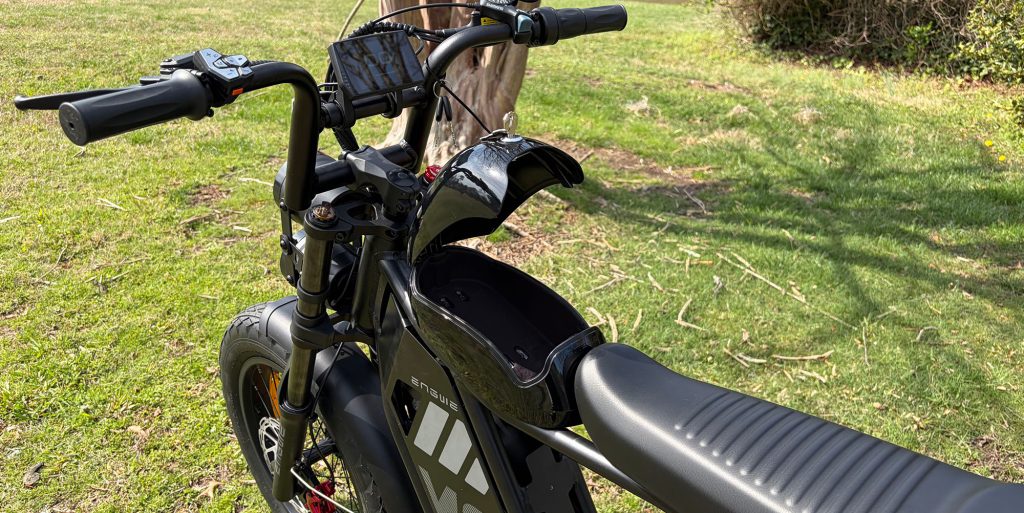
There is no folding frame design here, unlike many of the brand’s other models, which allows for the larger-than-normal seating that can handle a passenger just like a motorcycle – there’s even foot pegs for them, too, so they won’t just have dangling feet. What’s more, there’s a handy key-locking storage box right at the front between you and the handles, which I am very grateful for, as I would not be comfortable with my phone or other personal items just hanging out of my pocket.
All your data and settings are available to go through on the updated 3.5-inch TFT display, which has been simplified, but still offers a robust array of options to activate or adjust, and even indicates when the turn signals are in use, not to mention all the smart features.
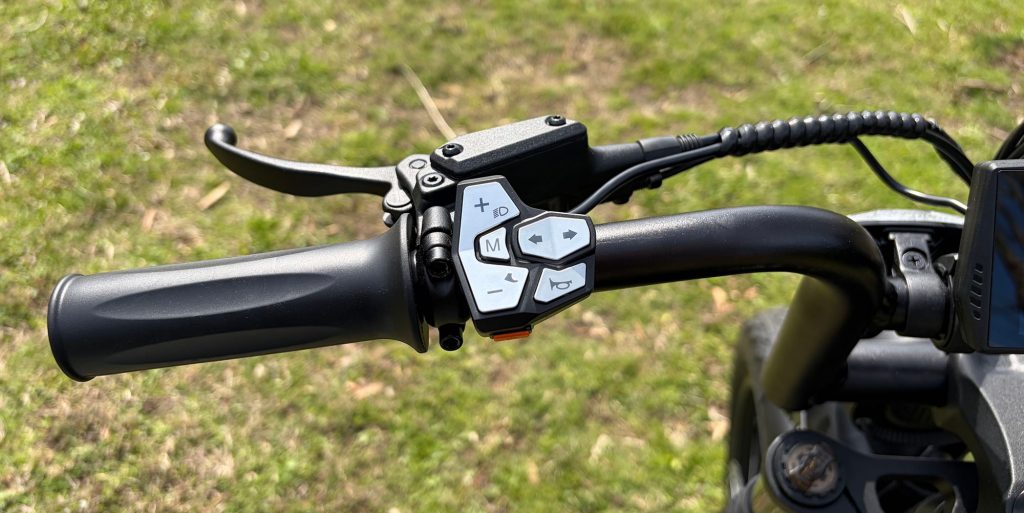
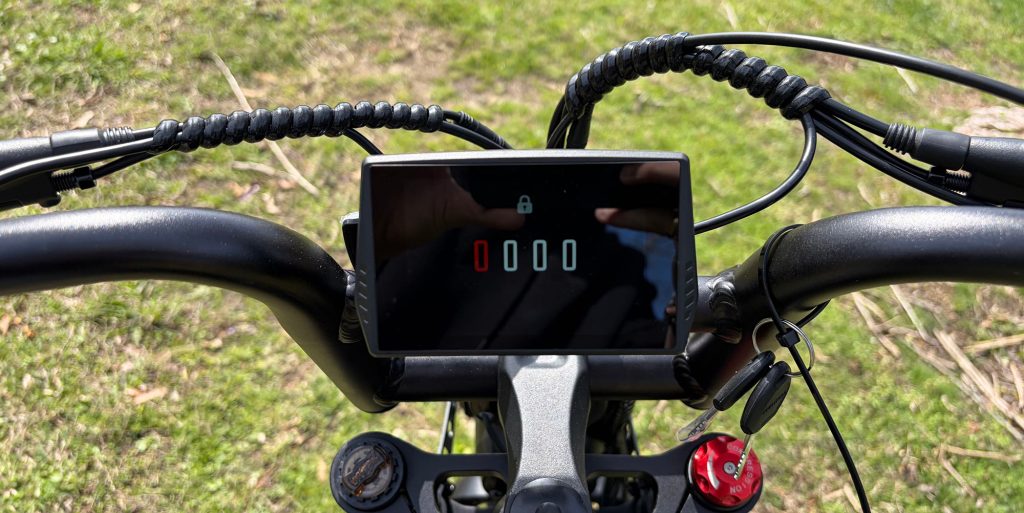
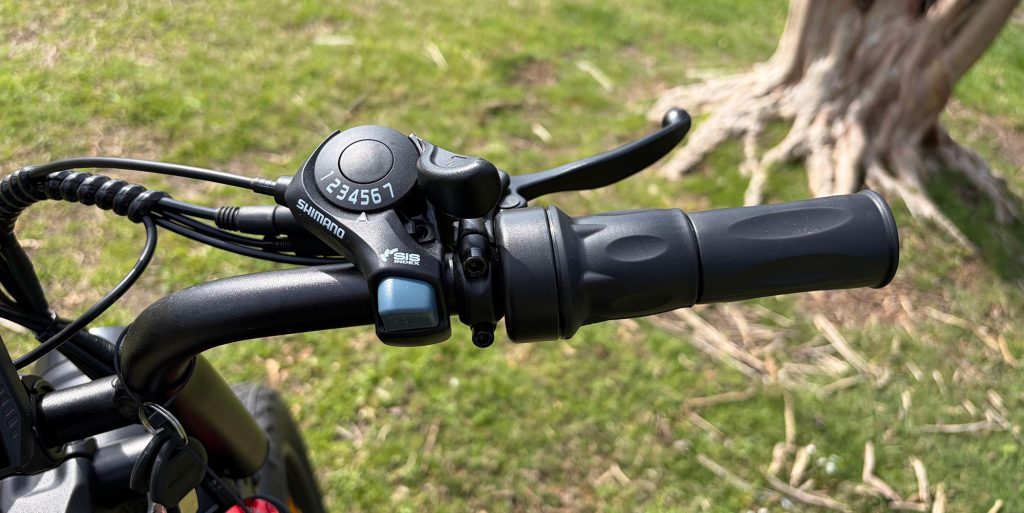
Speaking of smart features, you’re getting a solid list for the price here, with them able to be adjusted/activated via the display or through the companion app. Those include Bluetooth automatic locking/unlocking of the e-bike, cruise control, and on-screen navigation once your phone is paired with it through the app. What is a little disappointing is that this feature was not put right up front with instructions, and can be completely overlooked in the app due to the means of turning it on, which is what I did until I learned from someone else about it.
How to activate the navigation on Engwe’s M20 3.0:
- Install the app and connect to your e-bike
- Click “record” at the bottom of the screen, then use the search bar to find or enter your destination.
- Once your destination appears in the search, click on it, and the address, distance, and two options (Route or Navi) will appear. Clicking “Route” will display the projected route and any possible alternative routes on the screen. Clicking “Navi” will give you more simplified turn-by-turn directions, with a distance calculated until the next one.
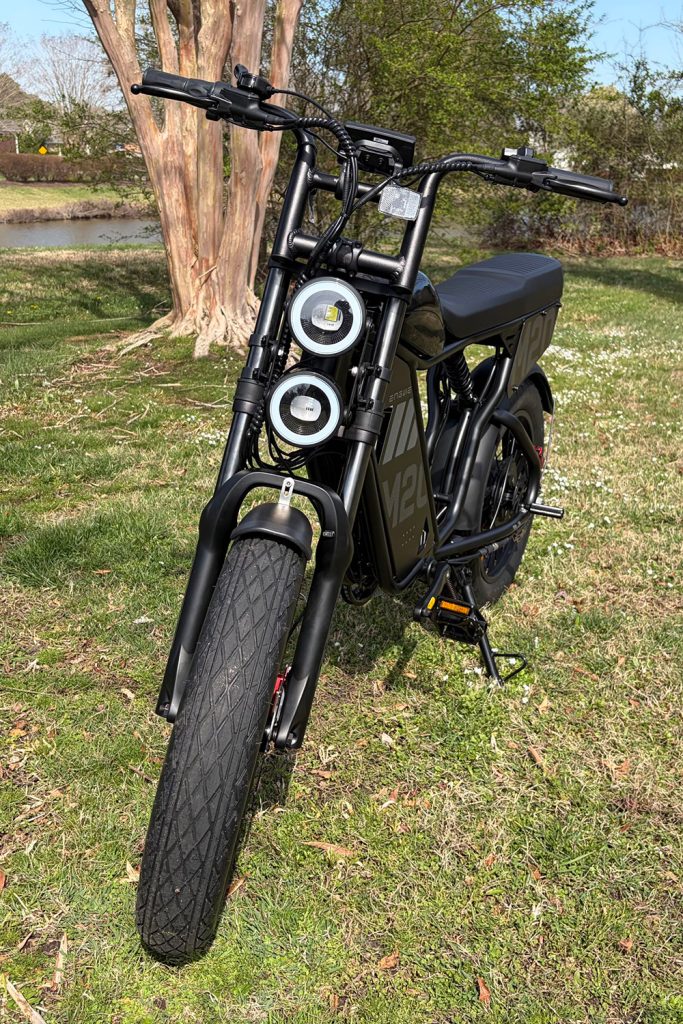
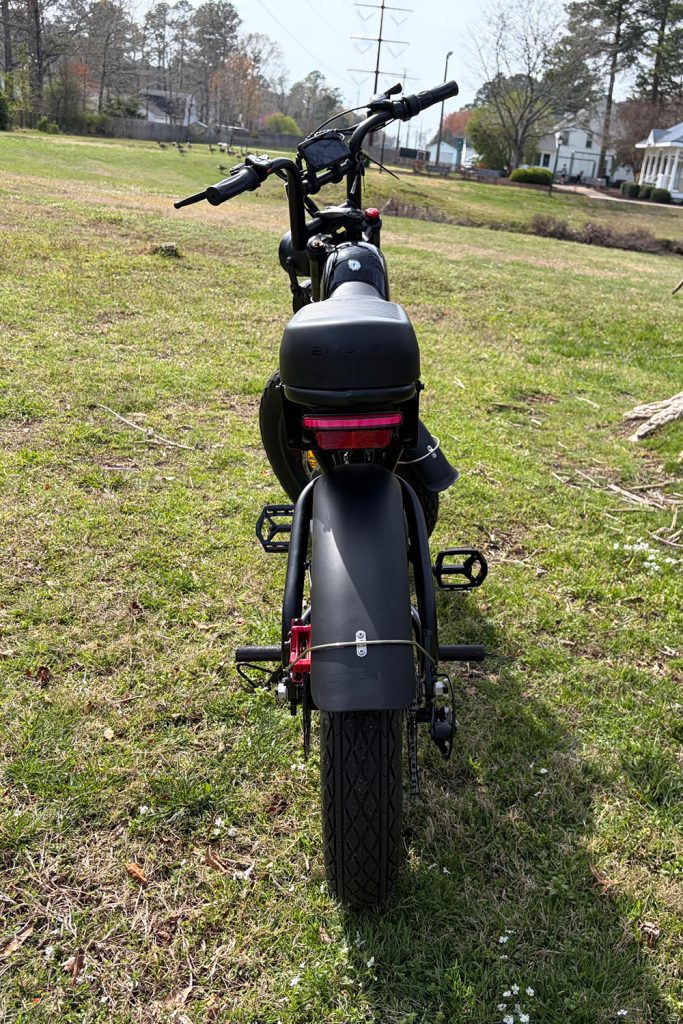
From there, you’ll find integrated lighting that you would expect, with dual 60V headlights and a rear 60V taillight that activates when braking, not to mention displays the turn signaling, too.
Gotta say, it’s hard to be mad at anything about this e-bike for the price. As you’ll find down below further, there are some gripes in terms of the assembly and binding of the e-bike to the app, but it’s really impressive to see such a solid ride cost so much less than I’d expect. The standard single-battery M20 3.0 configuration goes for $1,999 at full price, but has been kept down at $1,399 with discounts, while the dual-battery configuration sits higher at $2,499, with discounts having kept it down at $1,699. I think it’s safe to say you can assume that discounts going forward will likely cut the costs down to around these discounted rates, which, for what it can do, isn’t bad at all.
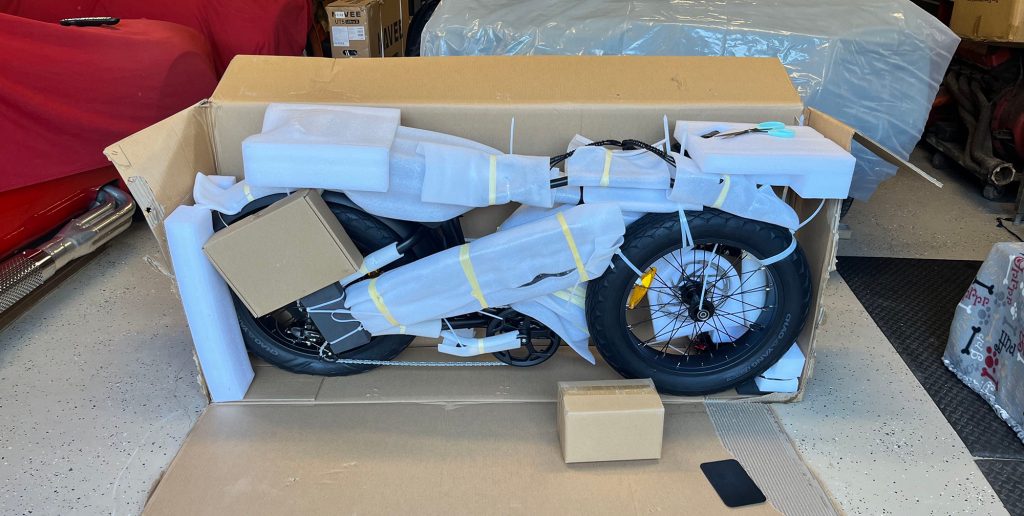
Unboxing and assembling Engwe’s M20 3.0 e-bike
Out of all the EVs I’ve been fortunate enough to ride, the M20 3.0 is by far the most assembly-heavy model that I can remember ever dealing with, and it would have been annoying to do certain parts on my own. That being said, it wasn’t as big a hassle as I may seem to be making it out to be. What was a hassle was not having an assembly manual and instead needing to find a tutorial online. I thought it was really odd, but maybe there was just a mix-up during its packaging or the workers were swamped, or who knows what else.
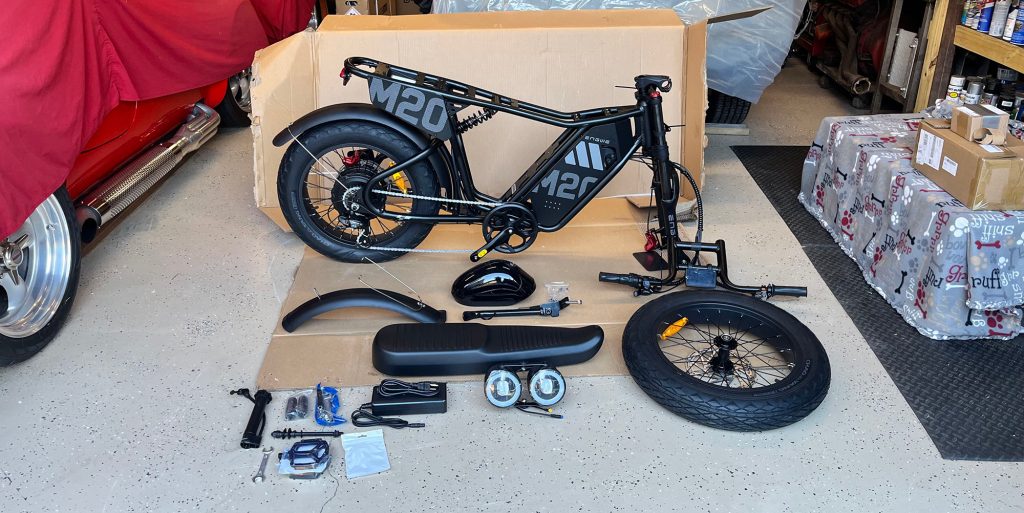
Like most e-bikes, I tend to go straight to cutting the walls of the box away, rather than going through the process of lifting it out of the box. It came very well packaged, with plenty of cardboard and Styrofoam padding on its sides and even wedged into open sections of the frame. I will say that what took the most effort was getting the Styrofoam block out of the section where the first battery goes, ultimately cutting away at it with a knife until I could clear it all out.
Once all the unwrapping was finished, you’re left with the seat, headlight, handles/display, pedals, storage tank, fenders, and the front tire. First was the storage tank that sits towards the fork, followed by the handlebars that you attach to the front fork with a little screwing action.
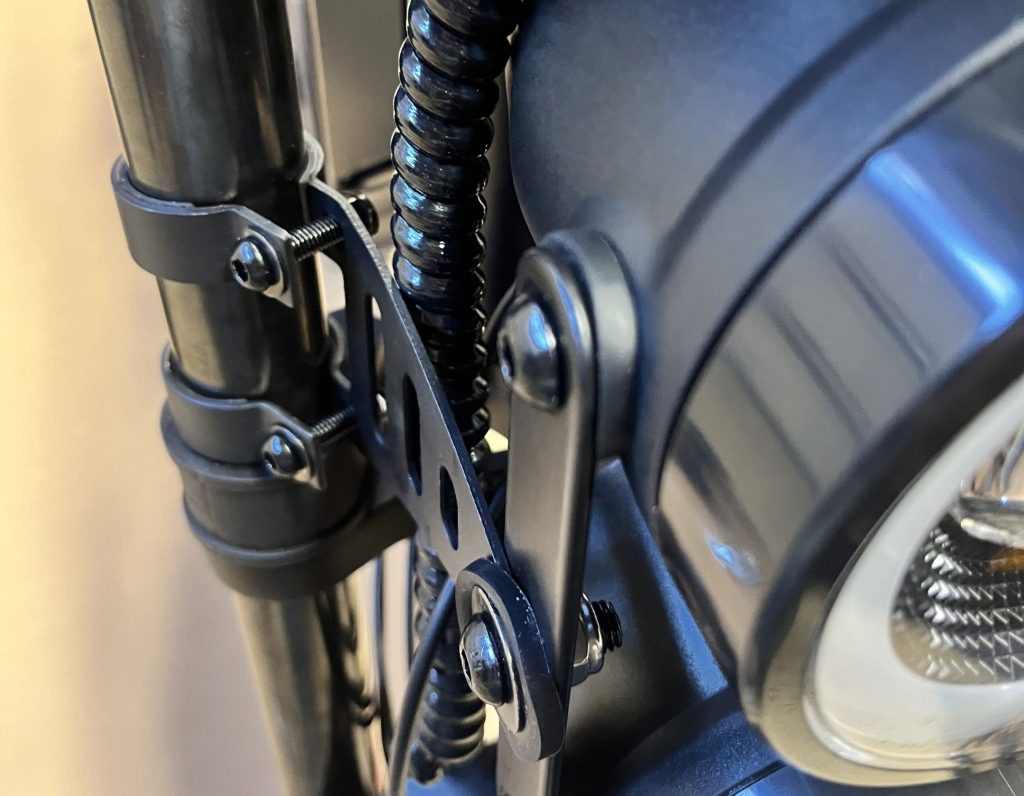
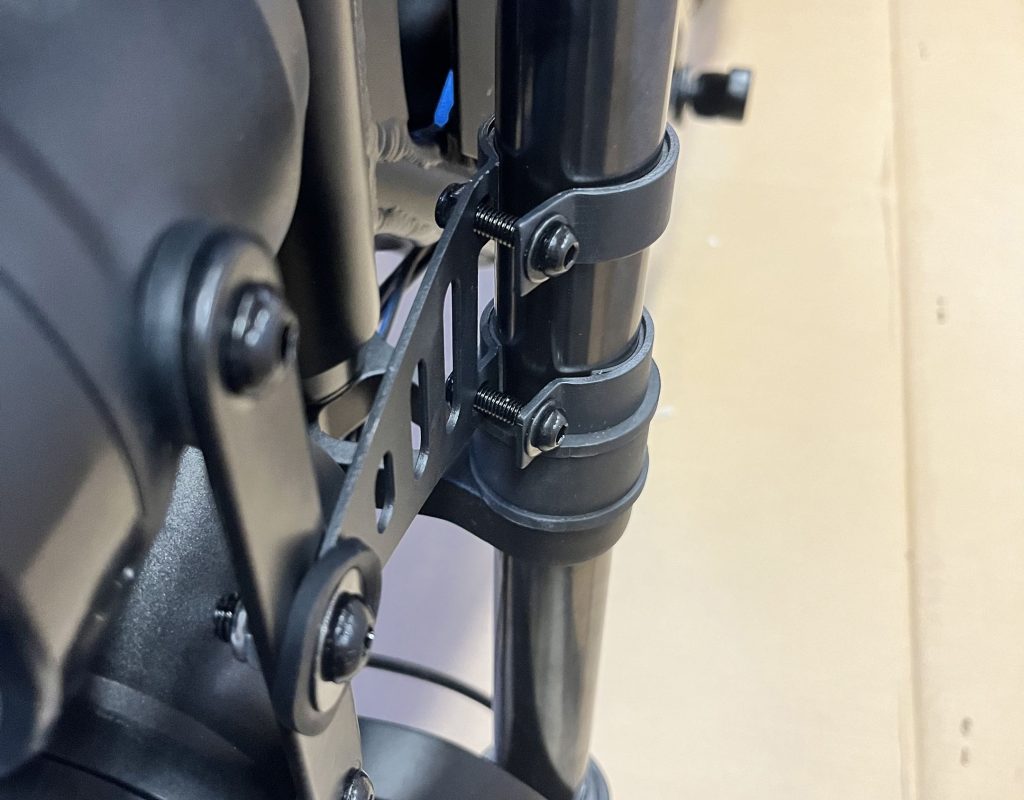
Next, I installed the dual-connected headlights, which I ended up having to bend the two brackets inwards just to get them attached, as keeping them completely flat as they came wouldn’t allow things to touch otherwise. From there, it was pretty basic stuff: putting on the seat by screwing from under the frame, attaching the pedals, and finally getting the front wheel on.
All in all, it wasn’t anything grueling, but it was a bit tedious and time-consuming, taking me close to thirty minutes to speed through it all, which I could see having taken as long as an hour or more if I had just gone with instincts and just mix-matching screws until I found the correct spots for everything.
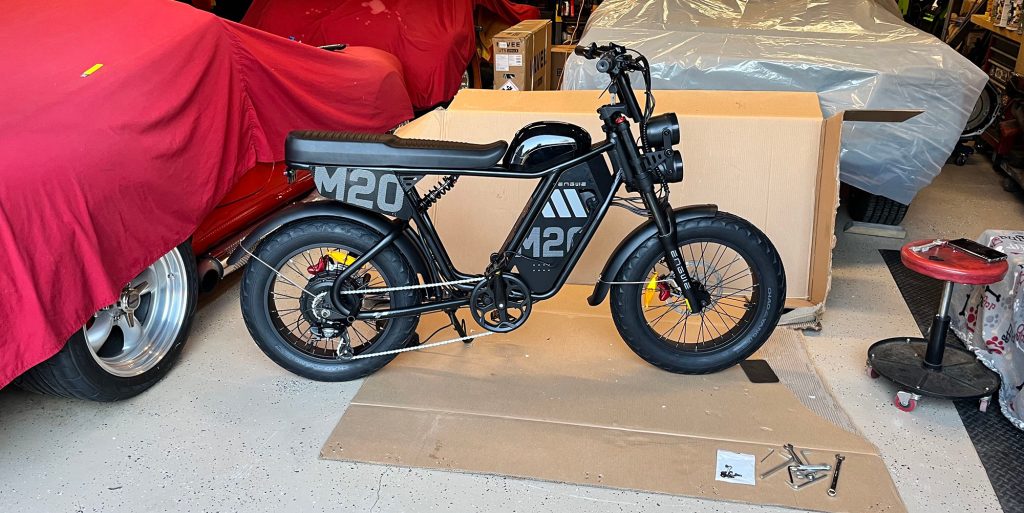
After all was said and done, I did what I assume everyone will do immediately: go straight to the app to bind the bike and activate its faster speeds. What is wild to me is that, in what I assume was Engwe’s efforts to curb reselling after theft, the brand requires some ridiculous verifications within the app. These include looking over the frame for various IDs and serial numbers spaced out everywhere, topped off by the need for your order number, order date, and a picture of the purchase page. While it may not bother most folks, I’m sure there will be plenty of riders who find this endlessly frustrating should they buy it second-hand down the road. Luckily, if you do go this route to secure your own, be sure to reach out to Engwe for help and/or alternative data inputs.
More of my Engwe M20 3.0 experience + final thoughts:
I’m going to start this section with another word of advice: again, please wear a helmet, especially when unlocking and cruising around at the 40 MPH top speed, but also, be very wary about trusting new and (particularly) younger riders to be completely proactive and responsible. I guarantee that in the coming months as more and more of these hit the streets, we will be getting plenty of reports of irresponsible riding around the country. Use your best judgment, and always be courteous to other riders, joggers, and car drivers that you’re sharing the roads with.
Once it’s been unlocked, this thing is no joke, and to highlight my above warning, the reason I really want to pound in the need to be careful on it entirely lies in the fact that it can max out at 40 MPH when only using the throttle. Normally, e-bikes tend to limit the speed that throttles can climb up to, with faster speeds available when the pedal assistance is being used, but not here. This is why I think the bike is far more standing in the moped space rather than a moped-style e-bike. Of course, this is the awkward grey area for this model, which I get into more down below when discussing the tires.
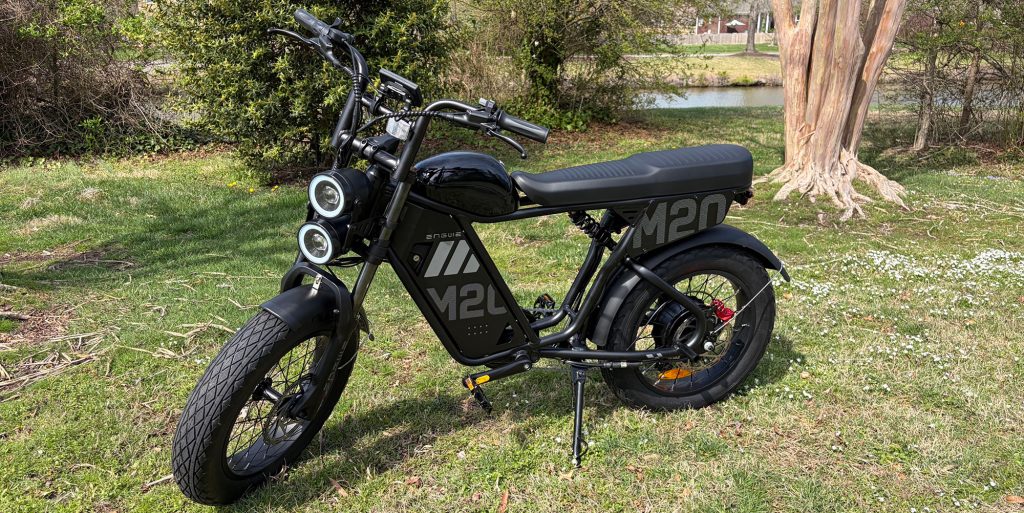
This leads me into my next main focus, which speed tends to affect: the mileage. As I stated earlier, this e-bike boasts a 90 to 180-mile travel range, depending on your battery setup, as well as what PAS levels/riding modes you have it performing within. When I keep to the lower-setting modes (1+2) that limit the speed to 20 MPH, I noticed getting closer to the total advertised mileage, especially using the pedal assistance, but once those monstrous speeds are unlocked (modes 3+4) and I cruise around at top speed using the throttle, I only really saw one battery last for up to 40 to 50 miles at most (luckily, I got two batteries so distance hasn’t been a concern for the more conservative way I ride). Of course, hotter/colder days will sap the batteries more, so like any other e-bike, it’s a matter of figuring out just how much things are affected by your riding style and either adjusting or accepting the rates.
For such a budget-focused ride, it also provides pretty smooth pedal assistance action, even beating out some of my Lectric and Rad Power e-bikes that definitely cut on in a lot choppier fashion. This is due to the fact Engwe has given the M20 3.0 a torque sensor over some of those other models’ cadence sensors. With it putting out the kind of torque and overall output power at its peak, I barely even notice a difference when climbing steeper roadways – both using the throttle or PAS. There are only a few steep areas that I deal with in Virginia, with a bit more in Brooklyn, but I haven’t noticed it hesitate or struggle at all.
Now, while this bike may be able to handle off-road riding, thanks to the adjustable suspension, which does a great job of smoothing out some of the bumpier parts of swampy Virginia terrain, as well as NYC streets, the tires are more tailored for asphalt, with the treads reflecting such. While it can certainly handle some of the grassier areas I took it through suspension-wise, the tires can slip on overtly wet sections of grass or loose gravel/dirt. I honestly can’t see myself ever taking this thing off-roading (that’s what our dirt bikes and ATVs are for), and have instead taken advantage of the range for errand running – both in Virginia and back up through Brooklyn. The major problem here is that those top 40 MPH speeds are not street legal, but I’d feel a lot more unstable climbing up that high in an off-road setting.
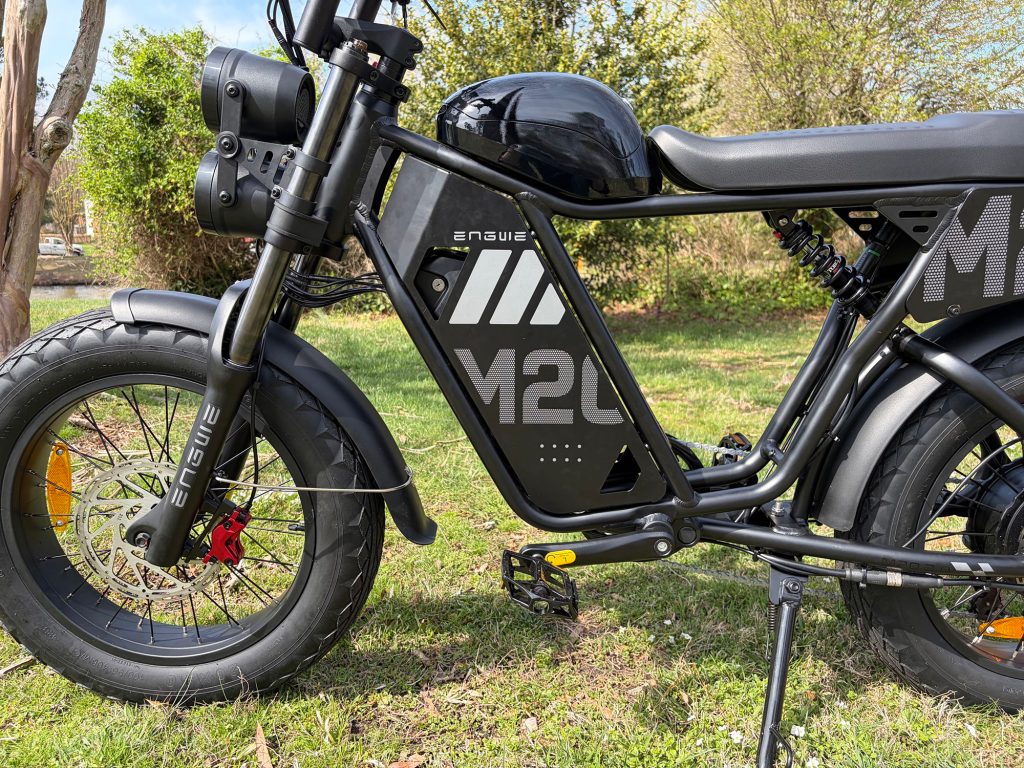
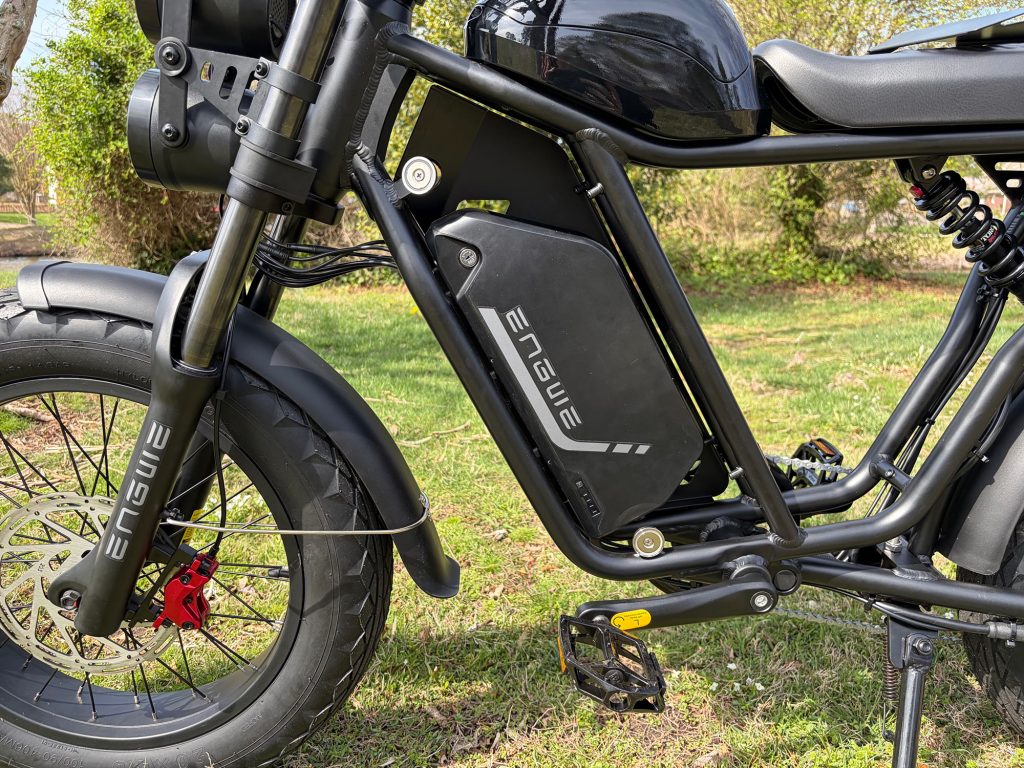
One thing I really like is the magnetic paneling that sits in front of the first battery’s location, with a second battery able to be installed against that section, just without any protective paneling. It’s also really nice that the fast-charging capabilities on the battery weren’t just big talk, as I usually only have to wait around 2.5 to 3 hours for it to fully charge (double that timeframe when the second battery is connected), which beats out many of my other e-bikes that tend to take around five or so hours to recharge from empty.
I’m also a really big fan of e-bikes that are given password protections and Bluetooth unlocking features, which seem to be more and more common these days, as you can’t really trust other people to respect your things. This allows me to hop off at a store and run inside real quick without really worrying about someone riding off with it. While it doesn’t have Apple Find My integrations like many other bikes, it does still come with its own location tracking, so should someone be strong enough and quick enough to throw it (while locked) into a truck bed, for example, I am confident in its ability to help me locate it. Reclaiming it from said thieves, however, will entirely depend on me (or you).
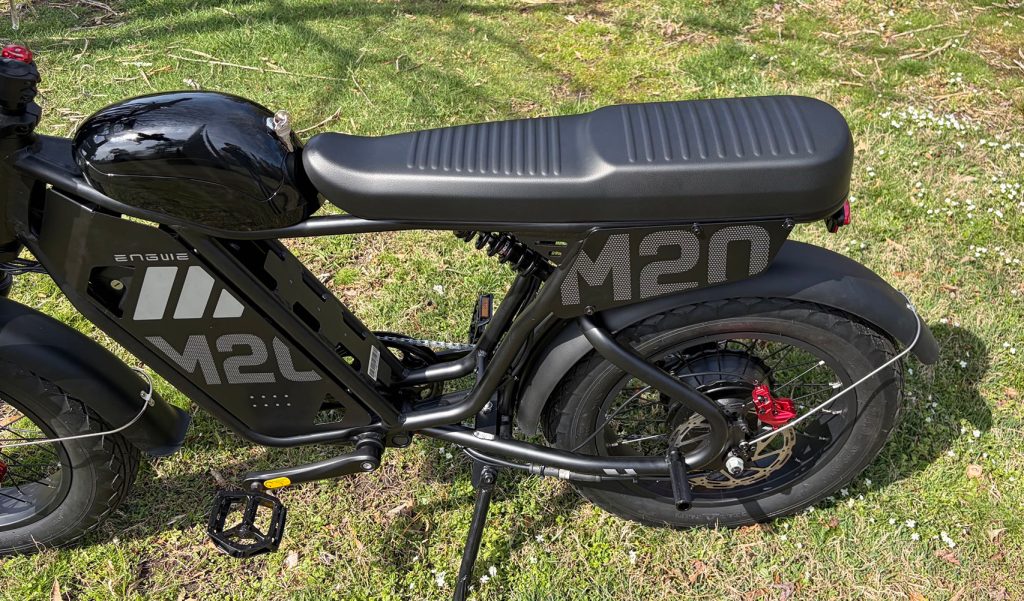
Lastly, the only other real gripes I have are the weight, which comes in at 102 pounds with one battery and 112 pounds with the second battery installed. This definitely means that it’s better for storing in a garage on ground level, with it taking two people to get up my one flight of stairs in Brooklyn, much like the MOD Easy 3 e-bike. The second of these gripes is on the seat’s cushioning. For something tailored for longer-distance travel, the seat is very stiff and can start to wear on you after a little time. It’s nothing major, but it would’ve been nice to have a little extra cushion. Who knows, maybe it will soften over time? Haven’t seen any sign of it yet, though.
At the end of everything, though, Engwe has put out a really monstrous and fun ride here, and although I know some people have very strong opinions about the brand, I really can’t hate anything to deter me from jumping on the M20 3.0. It’s all the better that, with the big discounts we’ve seen so far on it, it even comes in at a really accessible price when not sitting at its MSRP, but even then, you’re getting what you pay for here.
But remember, this thing sits in a really awkward place in terms of classification, as the tires are tailored for street riding, while the speed and suspension are focused on off-road riding. I’m sure I’ll be seeing more and more of these hitting roads and trails alike, now that the weather is warming up everywhere, and I get the feeling it will also be one of the prime examples used to further legislate what is allowed for an e-bike, as I doubt the 40 MPH speeds will be kept off streets by most riders.


FTC: We use income earning auto affiliate links. More.



Comments